

Microcement
What is microcement?
Microcement is much more than a coating: it is a way to transform any space with continuous, elegant surfaces full of personality.
Thanks to its reduced thickness and its artisanal application, it allows creating jointless finishes that provide breadth, continuity and a clean and sophisticated aesthetic. Its versatility makes it possible to adapt it to practically any style, from contemporary and minimalist environments to warmer, classic or natural spaces.
One of its great advantages is that it allows renovation without the need for major works. In many cases it can be applied directly to the existing coating, avoiding demolition and considerably reducing debris, execution times and the inconvenience of a traditional renovation.
Floors, walls, stairs, bathrooms, kitchens and even furniture can be covered with microcement, creating visually continuous and totally personalized spaces through different colors, textures and finishes.
In addition, it can be applied on a wide variety of surfaces such as tiles, porcelain stoneware, concrete, cement screeds, plaster, laminated plasterboard, marble, natural stone and even wood, as long as the substrate is stable and receives adequate preparation.
The result is a high-performance, resistant and durable decorative surface, capable of completely renovating a space without having to start from scratch.
With microcement, an existing surface stops being a limitation and becomes the starting point for a new design.
Where can microcement be applied?
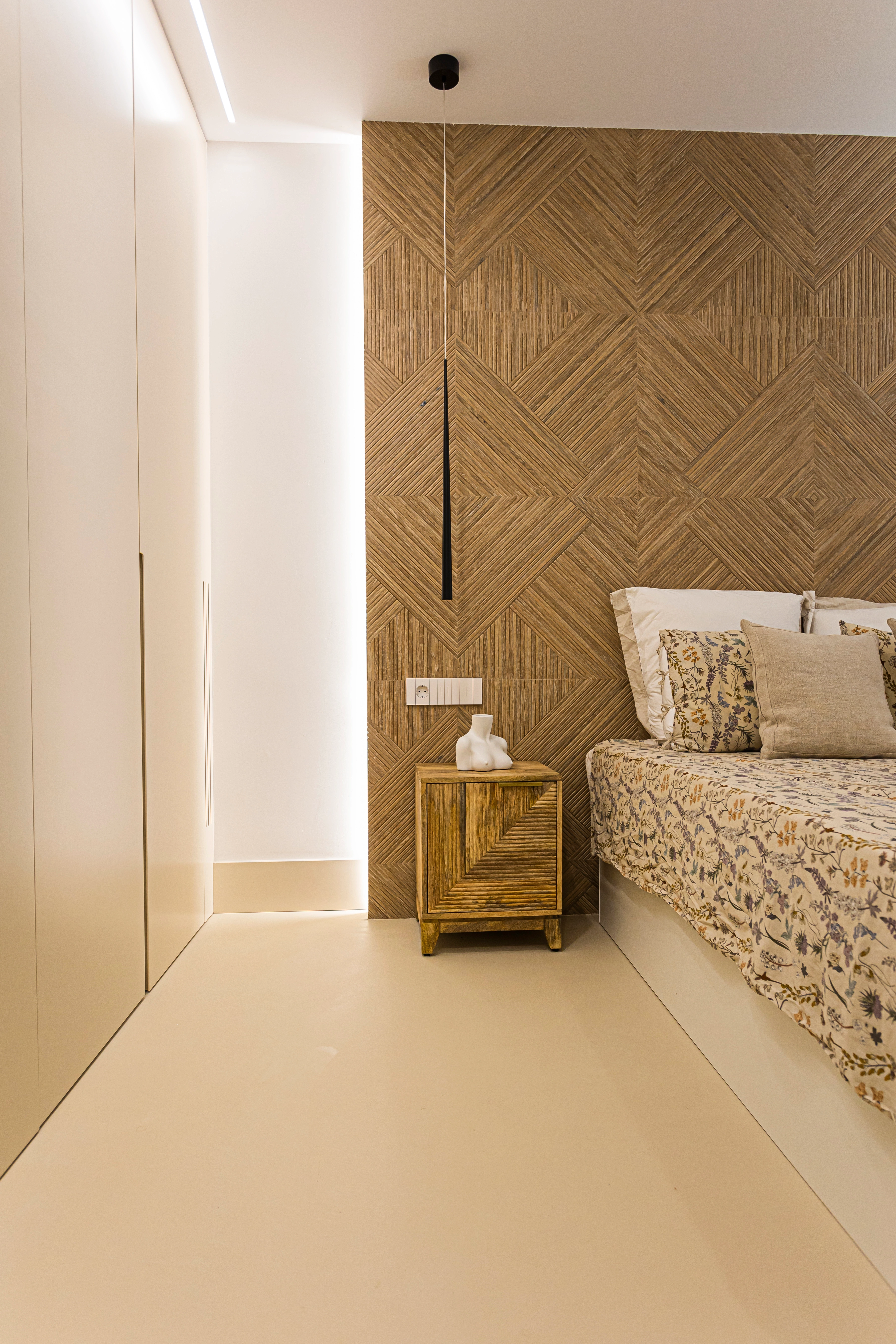
The versatility of microcement allows you to transform practically any space, both indoors and outdoors, offering infinite decorative possibilities.
Floors, walls, stairs, bathrooms, kitchens, terraces, facades, swimming pools and even furniture can take on a new look thanks to this continuous coating, which can adapt to different surfaces, styles and needs.
One of its great advantages is that, thanks to its reduced thickness and excellent adhesion, it can be applied directly to numerous existing coatings, as long as they are in suitable conditions and receive the necessary preparation. This allows spaces to be renovated without the need for major demolitions, reducing debris, execution times and the usual inconveniences of a renovation.
From small decorative details to large surfaces, microcement offers the freedom to create unique, elegant and personalized environments, combining design, resistance and functionality.
Because renewing a space does not always mean starting from scratch, but rather discovering everything it can become.
Types of microcement
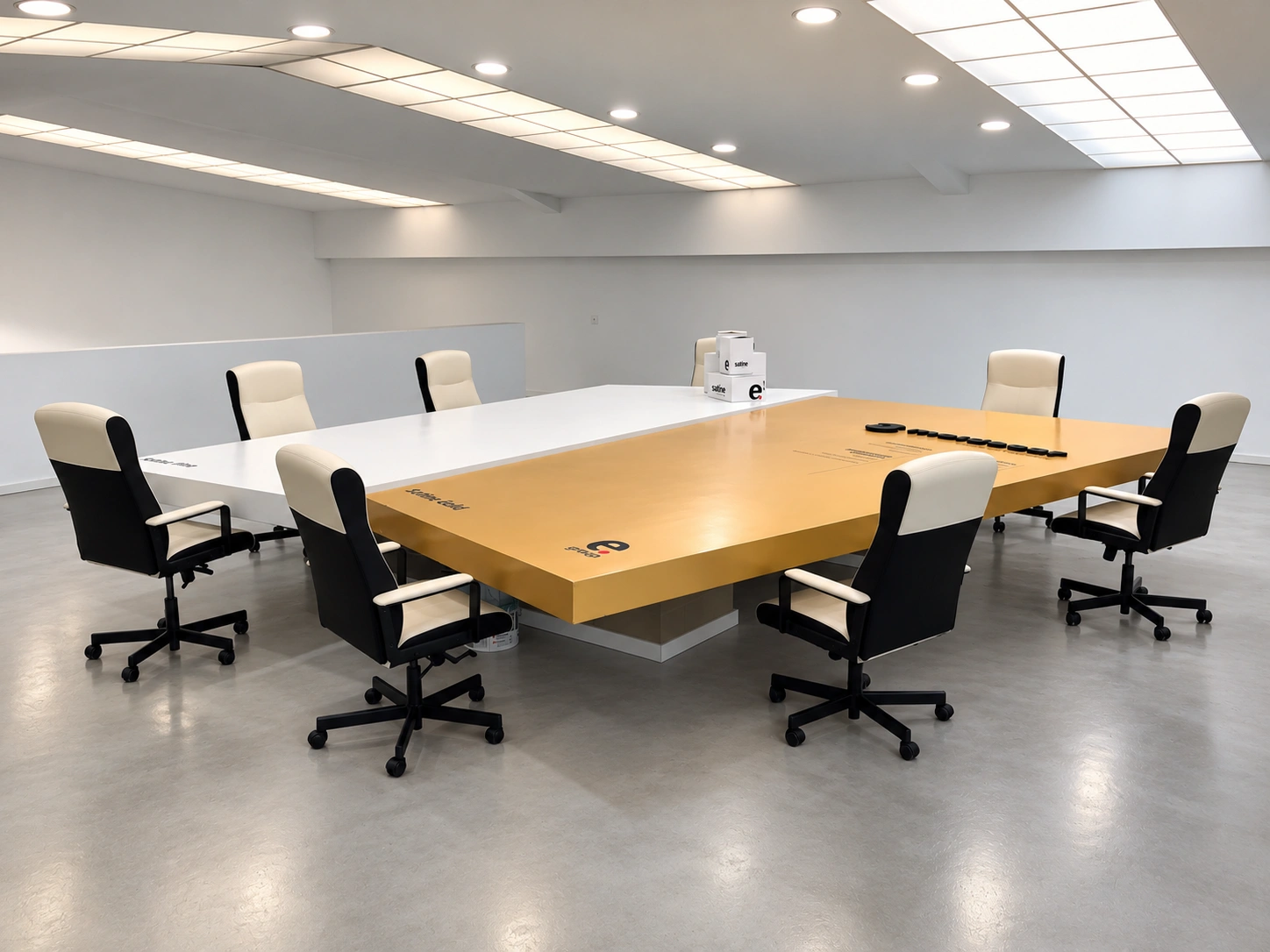
Not all spaces are the same, and that is why not all microcements have to be. Each surface, each environment and each project presents different needs that require specific solutions.
At Satine we develop different microcement systems that can be used individually or combined with each other, offering great freedom to customize both the technical features and the textures, colors and finishes of each surface.
Microcement for interior floors
Microcement floors combine elegance, continuity and resistance, adapting to both homes and commercial spaces and areas of frequent traffic.
With Satine it is possible to use the Tapa Roja single-component system and customize its finish with Tapa Verde, which provides a particularly pleasant touch and is ideal for bathrooms, or with Tapa Negra, which offers a more natural appearance and high resistance.
This versatility allows us to create unique floors, adapting each system to the functional and aesthetic needs of the space, without giving up comfort or design freedom.
Microcement for walls
Walls take on a new dimension thanks to the variety of textures, colors and finishes that microcement offers.
The Satine systems allow you to carry out the entire coating with Tapa Roja, combine it with a Tapa Verde finish or use the entire Tapa Verde system, especially appreciated for its touch and decorative possibilities.
From soft and minimalist surfaces to finishes with greater personality, each wall can become a leading element of the design, providing continuity, elegance and character to any room.
Microcement for exteriors
Terraces, facades and outdoor spaces can also enjoy the continuity and elegance of microcement.
Satine offers different solutions for outdoors, such as the Tapa Roja single-component system or the Tapa Negra system, the latter especially interesting for its breathability.
Furthermore, both systems can be combined, using Tapa Roja in the previous layers and Tapa Negra as a final finish, allowing the coating to be adapted to the conditions of each surface and achieving different decorative effects.
The correct choice of the system, together with adequate preparation of the substrate and the corresponding surface protection, allows the creation of resistant, durable and visually integrated outdoor spaces with their environment.
Microcement for bathrooms and wet areas
Microcement transforms bathrooms and wet spaces into continuous, elegant and welcoming environments, reducing joints and providing a greater feeling of spaciousness and visual cleanliness.
For these applications, Satine allows you to combine the Tapa Roja system with a Tapa Verde finish or to completely cover it with Tapa Verde, especially valued for its pleasant touch and decorative aesthetics.
These combinations offer ample freedom to customize walls and surfaces, creating warm, modern and functional environments, always using the application system appropriate to the conditions of humidity and exposure to water.
Microcement for swimming pools
Swimming pools can also enjoy the natural beauty and continuity of microcement, creating unique spaces that integrate perfectly into their surroundings.
For areas subject to permanent immersion or water accumulation, Satine exclusively uses its Tapa Roja one-component system in all layers, without incorporating primers.
The process is completed with a single coat of Aqua Varnish, diluted in proportion 1:1 with tap water, following the specific application procedure established for this system.
This solution offers ample freedom to customize colors and textures, allowing you to design pools with their own identity and a natural aesthetic that adapts to both contemporary projects and more traditional environments.
Non-slip microcement
Security does not have to be at odds with design. At Satine, the texture and slip resistance can be adapted to the needs of each surface.
By choosing the different grain sizes of the microcement, such as Xtreme, Base, Medium or Fino, it is possible to play with the texture of the material to achieve different finishes and levels of grip.
Furthermore, when the project requires it, specific anti-slip varnishes can be incorporated to improve these features.
In this way, terraces, entrances, bathrooms and other surfaces can combine safety, functionality and aesthetics without giving up the personality of microcement.
A system for every need
At Satine we believe that the true versatility of microcement lies not only in being able to apply it on different surfaces, but also in having the freedom to combine materials, textures and finishes to find the most appropriate solution for each project.
In addition, we have an advantage that makes the difference: we are manufacturers. This allows us to go one step further and adapt our products in formats, textures and colors to the preferences of each client, offering personalized solutions that adjust to both the technical needs and the creative ideas of each project.
Therefore, we do not limit ourselves to manufacturing microcement. We develop systems that complement each other and share our experience to help choose, combine and apply them correctly.
Because for us, each project is different and microcement must adapt to our clients' ideas, not the other way around.
Colors and finishes of microcement
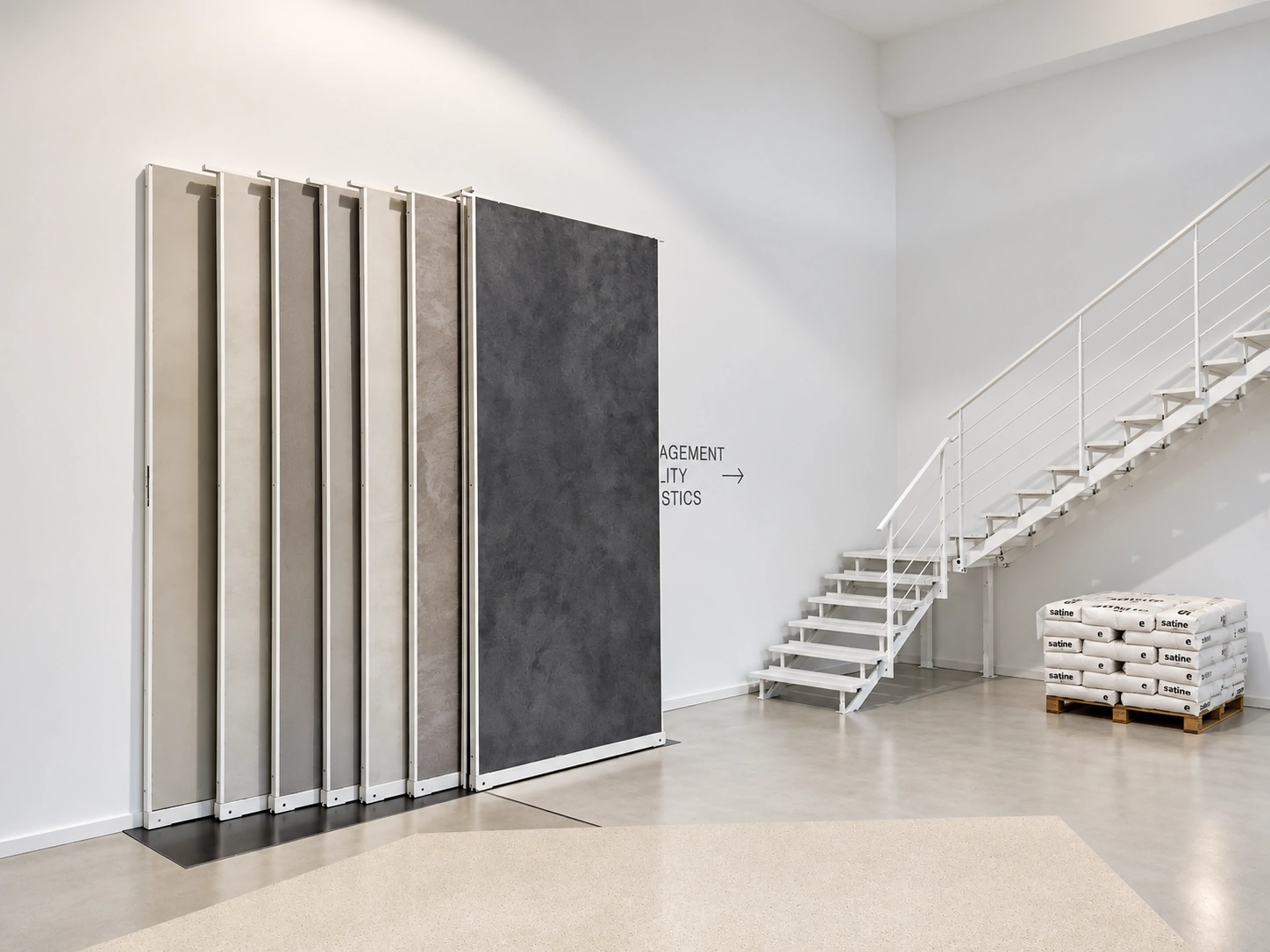
Microcement offers practically unlimited creative freedom, allowing any surface to be transformed through a wide variety of colors, textures and finishes that adapt to all decorative styles and trends.
From natural and warm tones to intense, elegant or industrial-inspired colors, each project can take on its own personality. The finishes can be soft and minimalist, satin, textured, rustic or with a marked industrial character, offering infinite possibilities to create unique environments.
At Satine, we also have an advantage that allows us to go beyond traditional collections: we are manufacturers. This gives us the freedom to develop personalized colors, adapt grain sizes and create custom textures and finishes, adjusting to the aesthetic preferences and needs of each project.
Because we understand that each space has its own identity and that design should not be limited by a color chart or a selection of predefined finishes.
With Satine, microcement adapts to your imagination, and not the other way around.
Microcement application process
The beauty of a good finish begins long before the final coat is applied. Correct application is essential to achieve resistant, durable surfaces with an aesthetic result worthy of each project.
The process begins with the evaluation of the substrate, checking its condition and carrying out, when necessary, preparation, repair or leveling work to guarantee an adequate base.
Next, the most appropriate Satine system is selected for each surface, combining the materials and different grain sizes according to the technical needs and the desired finish. Depending on the system and support, the corresponding primers, microcement layers and final protections are applied.
Thanks to its reduced thickness and the possibility of working on numerous existing coatings, microcement allows spaces to be transformed in relatively short periods of time, avoiding in many cases the demolitions and inconveniences of a traditional renovation.
At Satine we know that the quality of the material is as important as knowing how to use it correctly. Therefore, in addition to manufacturing our own products, we share our experience and knowledge to help professionals choose, combine and apply each system in the most appropriate way.
Because an exceptional finish depends not only on what is applied, but also on how it is applied.
Microcement maintenance
One of the great advantages of Satine microcement is its ease of cleaning and maintenance. Thanks to its continuous and jointless surfaces, keeping spaces clean and cared for is especially comfortable and easy.
Unlike other coatings that may require specific products for conservation, Satine systems allow you to use common household cleaning products, without the need to resort to special treatments or modify daily cleaning routines.
This ease of maintenance is a sign of the quality and resistance of our materials, developed to offer not only attractive finishes, but also practical, functional surfaces prepared for everyday use.
As with any coating, it is advisable to avoid excessively aggressive products or utensils that could deteriorate its surface protection. Furthermore, depending on use and wear, it may be advisable to review or renew said protection over time.
At Satine we believe that a good coating should make life easier, not complicate it.
Because true quality is not only appreciated in the finish, but also in the comfort of enjoying it every day.
Resistance and durability of microcement
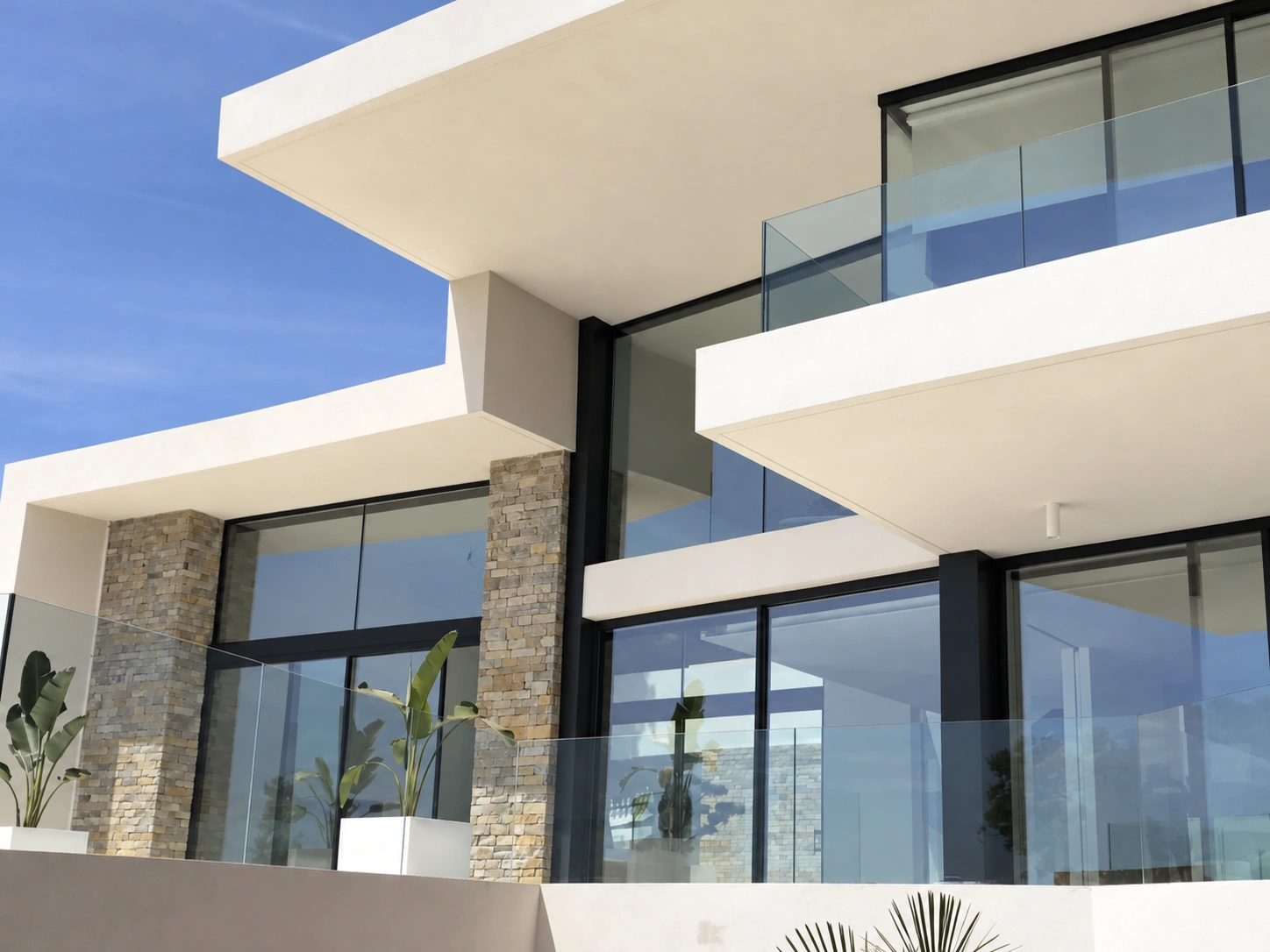
Just because its thickness is minimal does not mean that its resistance is also minimal. Microcement is a high-performance coating capable of combining elegance, hardness and durability, adapting to the demands of each space. At Satine we develop different systems and grain sizes, from finer and softer finishes to textures with greater body and character. This variety allows materials to be selected and combined according to the intended use, the level of traffic and the characteristics of each surface. Although traditionally coarser grain sizes are associated with higher traffic surfaces and finer grain sizes are associated with decorative finishes on walls, the resistance of a coating does not depend solely on the grain size. The quality of the raw materials, the formulation of each product and the technology of our systems allow us to achieve highly resistant surfaces, even with particularly fine and delicate finishes. Thanks to our experience as manufacturers, at Satine we develop solutions that offer the right balance between resistance, functionality and aesthetics, without limiting the design possibilities and adapting to the needs of each project. Because true resistance is not measured by the thickness of a coating, but by the quality and performance of the materials that make it up.
Does microcement require special care?
No. One of the great advantages of Satine microcement is precisely its ease of cleaning and maintenance. Thanks to the quality and resistance of our systems, surfaces can be cleaned with common household products, without the need to use specific cleaners or carry out special treatments. As with any coating, it is only recommended to avoid excessively abrasive products or utensils that may deteriorate the surface protection. At Satine we develop materials designed not only to offer high-quality finishes, but also to facilitate the daily lives of those who enjoy them. Because a quality covering should offer comfort, not additional obligations.
On what supports can microcement be applied?
One of the great advantages of Satine microcement is its extraordinary versatility. Thanks to the variety of systems we develop as manufacturers, we can offer solutions for practically any type of support, both indoors and outdoors. Tiles, ceramics, marble, terrazzo, concrete, cement, plaster, laminated plasterboard, wood, metal and even surfaces that require special treatments can be coated with microcement by choosing the appropriate system. The key is to adapt the system to the characteristics and conditions of each surface, taking advantage of the possibilities of our materials to achieve optimal adhesion and a resistant and long-lasting finish. At Satine, virtually any surface can become a new design opportunity.
Can microcement be applied on underfloor heating?
Of course. Satine microcement is perfectly compatible with underfloor heating systems. In fact, it is one of the most common applications of our coatings, thanks to its excellent behavior and the performance of our systems. Its reduced thickness favors efficient heat transmission, contributing to the thermal comfort of spaces without sacrificing the continuity and elegance of the floor. The Satine systems offer solutions adapted to the particularities of underfloor heating, combining resistance, durability and design freedom. Installation protocol for underfloor heating To guarantee an optimal result, it is important to respect some basic guidelines before, during and after application: Before application: The heating system must have previously completed its commissioning and testing cycle, ensuring the stability of the substrate and the removal of residual moisture in accordance with the system requirements. Turning off the heating: It is recommended to disconnect the underfloor heating at least 48 hours before starting work, checking that the substrate has reached a suitable temperature for the application. During application: The heating must remain off, avoiding sudden changes in temperature that could affect the drying and curing process of the materials. After application: Once the curing time established for the Satine system used has elapsed, the heating can be put into operation again progressively, increasing the temperature gradually and avoiding sudden thermal changes. Following these recommendations and the specific technical indications of each system, Satine microcement allows you to enjoy continuous, resistant floors that are perfectly integrated with radiant heating. A perfect combination of design, comfort and efficiency to enjoy warm and cozy spaces.
Is microcement waterproof?
Yes. At Satine we have different microcement systems developed to offer high water resistance and adapt to the needs of each space, from bathrooms and showers to terraces, facades and swimming pools. Water resistance does not depend only on surface protection, but also on the properties of the materials themselves and the combination of the different systems. For bathrooms and wet areas, Satine offers the Tapa Verde system, which can be used in its entirety or combined with Tapa Roja in the previous layers and Tapa Verde as a final finish, providing continuous, resistant surfaces with a particularly pleasant touch. In swimming pools and areas subject to permanent immersion, we exclusively use the Tapa Roja single-component system in all its layers, following its specific application procedure. For exterior floors, such as terraces, we can use Tapa Roja entirely or combine it with Tapa Negra as a final finish. On exterior vertical surfaces, such as facades, we can opt for Tapa Roja throughout the system or combine it with a Tapa Verde finish. This versatility allows us to select the most appropriate solution according to the conditions of exposure to water, the characteristics of each surface and the desired finish. Because at Satine we do not adapt the needs of the project to a single product, but rather we develop and combine our systems to offer the most appropriate solution in each case.
Is microcement non-slip?
Yes. Satine microcement allows the degree of slip resistance to be adapted to the needs of each space, combining safety, functionality and design freedom. Thanks to our different grain sizes, such as Xtreme, Base, Medium or Fino, we can play with the texture of the material itself to achieve smoother or grippier finishes, depending on the intended use of each surface. Furthermore, when additional slip resistance is required, we have protection solutions with non-slip finishes that allow these benefits to be improved without giving up the aesthetics of microcement. In this way, we can offer solutions adapted to both interior spaces and terraces, bathrooms, entrances and other areas exposed to humidity. Because at Satine we believe that safety and design should always go hand in hand.
What is the difference between microcement and polished concrete?
Although visually they may appear similar, microcement and polished concrete are two very different systems, both in terms of their composition, thickness, application and finish. Satine microcement is a continuous decorative coating just a few millimeters thick, which is applied by hand in thin layers on new or existing surfaces. Its application is simple, it does not require heavy machinery or industrial polishing equipment and it allows you to renew floors, walls, stairs and other surfaces without the need for major works. On the contrary, polished concrete is a thicker, cementitious-based pavement, whose surface is mechanically worked using roughing and polishing machines, similar to those used for terrazzo. Its execution requires specialized equipment, usually generates more dust and involves a more complex construction intervention. In addition, you need to consider the corresponding control and movement joints. Another important difference is versatility. While polished concrete is mainly used on pavements, Satine microcement can be applied on both horizontal and vertical surfaces, offering a wide variety of colors, grain sizes and textures. Thanks to our different systems and our capacity as manufacturers, we can achieve finishes that reproduce the natural and industrial appearance of concrete to softer, more elegant and personalized surfaces, adapted to the style of each project. In short, Satine microcement allows you to enjoy the aesthetics of polished concrete with much less thickness, easier application, less work and much greater decorative freedom.
How long does it take to apply microcement?
One of the great advantages of Satine microcement is the speed and simplicity of its application. Under normal conditions, a renovation can be completed in approximately 3 to 5 days, depending on the surface, the condition of the substrate and the system selected. Thanks to its reduced thickness and the possibility of applying it directly on numerous existing coatings, demolitions are avoided in many cases, considerably reducing debris, inconvenience and execution times. Furthermore, the different Satine systems allow the application process to be adapted to the characteristics of each project, optimizing the work without sacrificing the quality, resistance and durability of the finish. Because renovating a space does not have to become an endless task.
Is it necessary to trim the doors when applying microcement?
In most cases, no. One of the great advantages of Satine microcement is its reduced thickness, generally just 2 to 3 mm, which allows existing floors to be renewed without the need to modify doors, frames or carpentry elements. Unlike other coatings that considerably increase the height of the floor, microcement allows spaces to be transformed with minimal intervention, avoiding additional work and reducing the costs and inconvenience of renovation. It will only be necessary to check the clearance available under the doors and the particular conditions of each installation. With Satine, renewing the floor does not mean having to renovate everything around it.
How should microcement be cleaned and maintained?
Satine microcement is very easy to clean and hardly requires maintenance. Daily cleaning You can use regular household cleaning products, without having to buy special products. We only recommend avoiding those that are too aggressive or abrasive and could damage the finish. Maintenance over time It does not need special treatments or complicated care. Simply, over the years and depending on use, it may be advisable to renew the protection layer if it shows wear, as occurs with other coatings. It's that simple: a material designed to be enjoyed, not to worry about its maintenance.
Can microcement lose color over time?
Satine microcement is designed to maintain the stability of its colors over time, both indoors and outdoors. Our pigments are resistant to alkalinity, which helps avoid color alterations caused by cement components or certain resins. In addition, the Satine protective varnishes, both water-based and solvent-based, incorporate protection against UV rays, acting as authentic "sunglasses" that protect the pigments and help preserve their original shade. Thus, the combination of quality pigments and adequate protection allows you to enjoy intense and long-lasting colors for many years.
Why might there be differences in brightness between the sample and the finished project?
The microcement samples are a reference for the finish, but there may be small differences in gloss with respect to the final result. Factors such as surface texture, type of varnish chosen, number of coats and lighting conditions can influence how we perceive gloss. At Satine we have different finishes, from matte to satin and glossy, which allow the result to be adapted to the preferences of each client. Furthermore, as it is a handmade application coating, each surface has its own personality, which provides a unique character to each project. Because each space is different and its finish can also be different.
Can colors be combined on the same surface?
Of course. Satine microcement allows you to combine different colors and shades on the same surface, creating original designs, unique decorative effects or delimiting different spaces without the need to use other materials. Furthermore, as manufacturers, we can develop custom colors and adapt them to each client's preferences, offering practically unlimited creative freedom. With Satine, the only limit is your imagination.
Is it mandatory to apply a reinforcing mesh?
Not always. Its use depends on the Satine microcement system chosen and the characteristics of the substrate. As reinforcement, the mesh is essential when it is part of the application system established by Satine, such as in swimming pools with Tapa Roja and certain facade applications. It is also recommended for underfloor heating, terraces, joints between different materials and surfaces at risk of cracking, as it helps distribute stress and reduce the appearance of cracks. As an aid to regularization, the mesh can be incorporated into supports with irregularities or lack of planimetry. Combined with the appropriate layers of material, it makes it easier to obtain a more uniform and homogeneous surface, although leveling depends on the material applied and not on the mesh itself. On firm, stable and correctly prepared supports, certain Satine systems can be applied without the need for mesh. At Satine, the mesh is used when the system requires it or when it provides a real benefit, either by reinforcing the coating or facilitating the regularization of the surface.
Microcement application process
One of the great advantages of the Satine systems is their ease of application and the possibility of combining different materials to adapt the coating to each project. Our Tapa Roja single-component system allows you to apply all your layers fresh on fresh, considerably speeding up execution times without sacrificing resistance or the quality of the finish. Furthermore, this feature allows you to use Tapa Roja as the base of the covering and subsequently choose the most appropriate finish according to the needs of each space: Tapa Verde, to achieve a particularly pleasant touch; Tapa Negra, for a more natural and resistant appearance; or the Tapa Roja itself, taking advantage of all its decorative possibilities. In this way, we can combine speed, versatility and customization, adapting each system to the characteristics of the substrate and the desired result. Because at Satine we develop materials designed to facilitate the professional's work and offer the client greater design freedom.
How much does microcement cost per square meter?
Each project is different, and so is its price. To calculate it, it is important to know what surface it is going to be applied on, its condition and where it will be located, since covering an interior floor is not the same as covering a terrace, a wall or a swimming pool. The number of square meters that are carried out in the same work also influences, since, in general, the larger the surface, the more the application costs and, therefore, the price per square meter can be optimized. At Satine, as manufacturers, we can offer you different systems, colors and finishes that adapt to both your tastes and the needs and budget of your project. Tell us where you want to apply the microcement, on what surface and how many meters you need. We will help you find the best solution and calculate its cost, without obligation.
Request a quoteHow can I sign up for a microcement course?
Very easy! You can contact our team directly by phone, WhatsApp or through the form on our website. We will be happy to inform you about upcoming courses, available dates and how to reserve your place. At Satine we offer theoretical and practical training, both for those who want to get started in the world of microcement and for professionals who want to expand their knowledge and perfect their techniques. As manufacturers, we know our materials first-hand and share our experience to teach you how to correctly choose, combine and apply the different systems according to the needs of each project. Do you dare? Write to us at WhatsApp 0034 692 100 100 or call us 0034 692 100 100 or 0034 964 100 100 and we will We will help you take the next step.
Can microcement be applied at low temperatures?
Yes, although it is important to control both the temperature and the environmental humidity. At Satine we recommend working preferably at temperatures higher than 10 °C, respecting the indications of each system. Drying: It is the process by which the material loses water or volatile components. Low temperatures and high ambient humidity can slow it down, increasing waiting times between coats. Curing: It is the process by which the material progressively develops its hardness and resistance properties. Temperatures that are too low can delay this process and affect its final performance. Therefore, in cold or humid times, it is advisable to maintain an adequate temperature, good ventilation and avoid condensation on surfaces. The important thing is not the time of year, but having the right conditions to achieve an optimal result.
Why choose Satine microcement for your project?
Because at Satine we are manufacturers, and that is a real advantage for our customers. We do not depend on a third-party catalog: we develop our own formulations, select raw materials and directly control the quality of our materials.
This allows us to offer something that is not always possible with a standard product: adapt to what you need. Are you looking for a specific color, a special texture or a different finish? We can customize grain sizes, shades and formats, and even combine different systems to find the most appropriate solution for your project.
And there is another important advantage: we know our materials from the inside. We know how they work, what possibilities they offer and how to get the most out of them. Therefore, in addition to high-quality products, we put our experience, advice and training at your disposal to help you achieve the result you are looking for.
All this with the advantages of Satine microcement: continuous surfaces, resistance, durability, ease of maintenance and the possibility of renovating numerous spaces without the need for major works.
The difference is simple: while others can offer you the products they have available, at Satine we have the ability to adapt our materials to what you need.

Do you have a project in mind? Let's talk.
Tell us what you want to do, what finish you would like to achieve or what you need to solve. Whether you are an individual or a professional, we will be happy to listen to you and find the best solution together.
WhatsApp: +34 692 100 100 Phone: +34 964 100 100 Web: www.satine.com
You imagine the result. We have the means and the experience to make it a reality.
Contact Satine